Choosing the right capacity for a fuel tanker semi trailer sounds like a simple math problem — until you realize that getting it wrong costs you every single day the unit is on the road. Too small, and you run extra trips, burn extra fuel, and pay extra driver hours for work one properly sized fuel trailer could handle. Too large, and you haul dead weight, exceed axle-load limits on secondary roads, and pay for capacity you never use. A fuel tank trailer is a 15-to-20-year asset. The capacity decision you make at purchase compounds — for better or worse — across every kilometer of that lifespan. This article breaks down exactly how to calculate the right fuel semi trailer capacity for your operation.
What Fuel Semi Trailer Capacity Options Are Available on the Market?
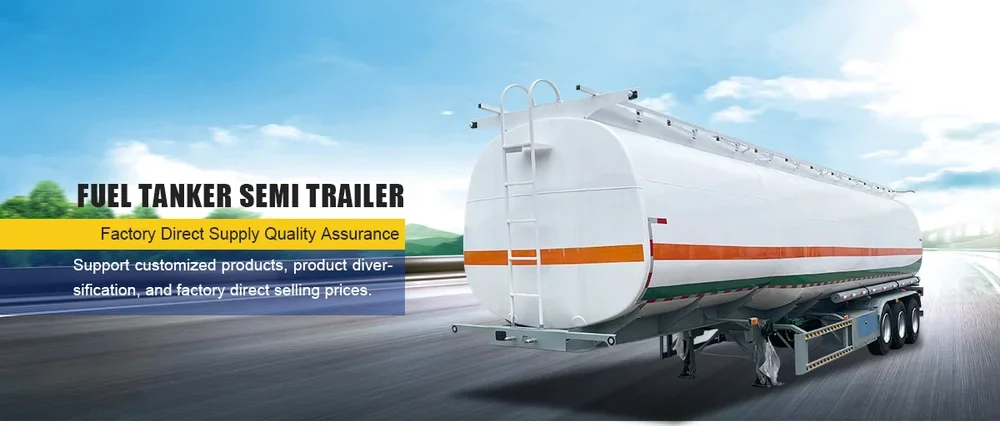
Before you calculate what you need, understand what is available. The standard fuel tanker semi trailer capacity range spans from approximately 30,000 liters to 60,000 liters, with most export-market trailers clustering in the 40,000-to-50,000-liter band. Smaller-capacity fuel trailers in the 30,000-liter range are typically specified for routes with strict per-axle weight limits, mountainous terrain, or smaller delivery points where a larger tanker cannot maneuver. At the upper end, 55,000-to 60,000-liter fuel semi trailers maximize per-trip volume on long-haul highway routes, but require a tractor head rated for the combined gross vehicle weight and roads engineered to handle it. Between these extremes lies the sweet spot most fleets operate in — but finding your exact number requires looking at your own data, not industry averages.
How Does Payload Capacity Differ from Tank Volume?
One of the most common mistakes fleet buyers make when specifying a fuel tank trailer is confusing tank volume with legal payload. A fuel semi trailer with a 45,000-liter tank does not actually carry 45,000 liters of product on every trip — because the weight of that volume must fit within the legal gross vehicle weight limit on your routes, minus the tare weight of the trailer and tractor head combined. Diesel weighs approximately 0.85 kg per liter, so 45,000 liters equals roughly 38,250 kg of product alone. Add the trailer tare weight — approximately 6,500 kg for a full aluminum 3-axle fuel tanker semi trailer — and the tractor head weight of around 8,000 to 9,000 kg, and the total combination can exceed 53,000 kg. If the roads you operate on enforce a 48,000 kg limit, you are paying for tank volume you cannot legally use. Always calculate payload backward from the legal weight limit, not forward from the tank size.
Why Do Your Routes Determine the Right Fuel Tanker Capacity?
Capacity is not an isolated trailer specification — it is a function of the roads the unit will actually travel. A fuel tanker semi trailer specced for 55,000 liters on smooth highway corridors makes perfect sense for a Kenyan fleet running the Mombasa-Nairobi highway. That same trailer becomes a liability on secondary roads in rural Tanzania or eastern Nigeria, where bridge weight restrictions, unpaved surfaces, and tight delivery point access make a smaller, more maneuverable fuel trailer the more profitable choice. Before you settle on a capacity number, document the worst road segment on your longest regular route — not the average, not the best. Your fuel semi trailer capacity is ultimately capped by that weakest link.
How to Calculate the Right Capacity for Your Fleet
Start with data you already have — or should have. For a fleet already in operation, pull delivery records for the last 90 days. Identify your largest single-drop delivery volume. That number, not your average, is your baseline. Next, determine the legal payload available on your primary routes: take the enforced gross vehicle weight limit, subtract the tractor head weight and the fuel tank trailer tare weight for the configuration you are considering, and divide the remaining payload by the density of the fuel you haul. The result is your maximum usable tank volume. Compare that number with your largest delivery volume. If the largest delivery fits within the usable volume with at least 10% headroom for growth, you have found your capacity. If it does not, you either need a different axle configuration to increase legal payload, or you accept that your largest deliveries will occasionally require a second trip — which is a legitimate business decision if those large deliveries represent a small fraction of your total runs.
What Happens When You Choose the Wrong Capacity?
Under-specifying a fuel tanker semi trailer carries obvious consequences: more trips, higher fuel cost, more driver hours, faster accumulated mileage, and earlier replacement. But over-specifying is equally damaging in less visible ways. A fuel trailer with capacity you never use still carries the full tare weight of the larger tank on every single trip — dead weight that burns fuel, wears tires, and stresses suspension components across hundreds of thousands of kilometers. Over-specified fuel tank trailers also struggle on routes with low-clearance delivery points or weight-restricted bridges, limiting the routes they can serve and reducing fleet flexibility. The most expensive fuel semi trailer in your fleet is not the one with the highest purchase price — it is the one with capacity that does not match your routes.
Should You Buy One Large Fuel Tanker or Two Smaller Units?
Some fleet buyers facing a wide range of delivery volumes consider splitting the difference with two smaller fuel trailers instead of one large unit. This approach has merit when your delivery profile is genuinely bimodal — for example, a mix of high-volume highway deliveries and low-volume rural station drops. Two 30,000-liter fuel tanker semi trailers give you the flexibility to run both simultaneously on heavy days and park one on light days, reducing the dead-weight penalty of hauling a half-empty large tank. The trade-off is a higher combined purchase cost, more maintenance, and more drivers. The decision comes down to a simple question: does your weekly delivery schedule justify two units running at acceptable utilization rates? If either fuel trailer would sit idle more than 30% of the time, the single larger fuel semi trailer is almost always the better investment.
How Does Your Tractor Head Affect Capacity Choice?
Your fuel tank trailer does not operate alone — it is half of a tractor-trailer combination, and the tractor head's specifications directly constrain the trailer you can pair with it. A tractor head with a lower horsepower rating, lighter chassis, or lower towing capacity may not legally or safely pull a fully loaded 55,000-liter fuel semi trailer. Conversely, pairing a small-capacity fuel trailer with an overpowered tractor head wastes the tractor's capability and burns unnecessary fuel. The capacity conversation should start with the combined specifications of your existing tractor fleet — or the tractor head you intend to purchase alongside the trailer. Specify the fuel tanker semi trailer and the tractor head as a matched system, not two independent purchases.
Turning Your Capacity Calculation Into an Actual Order
Once you have done the math — legal payload, route constraints, largest delivery volume, tractor head specs — the question becomes: who can build this fuel semi trailer to your numbers, not theirs? Many manufacturers start from a standard catalog and adjust at the margins. What you want is a factory that starts from your delivery data and works forward to the trailer.
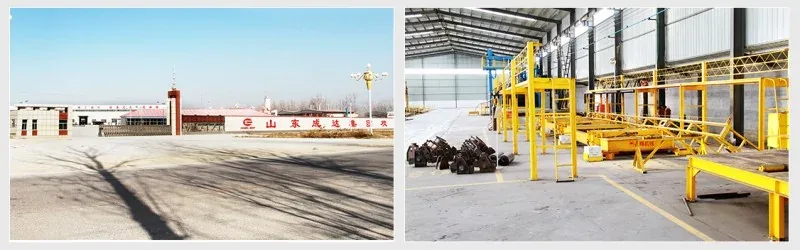
Shandong Chengda Auto Sales Co., Ltd., founded in 2005, operates this way. Whether your fuel tank trailer requires aluminum alloy for weight savings and corrosion resistance, or carbon steel where initial purchase budget is the priority, Chengda builds to your specification — not a preset template. Capacities range from 30,000 to 60,000 liters, with material, compartment layout, axle count, suspension type, and discharge system all determined by your operational requirements rather than a fixed options list. A remote after-sales team provides online technical support and spare parts coordination for fleet buyers across Africa, Latin America, and Southeast Asia.
The transition from a spreadsheet calculation to a road-ready fuel tanker semi trailer is where the right manufacturing partner proves its value. A factory that asks about your routes before it quotes a price is a factory that understands the asset you are actually buying — not just the steel or aluminum it is made from, but the 15 to 20 years of operation that follow.
Key Takeaways for Choosing Your Fuel Tank Trailer Capacity
The right fuel semi trailer capacity is not the biggest number you can afford — it is the number that maximizes your payload on your routes, with your tractor head, under your local regulations:
1. Calculate payload backward from the legal weight limit on your actual roads, not forward from the tank volume.
2. Use your largest single-drop delivery volume as the baseline, not your average. Add 10% for growth.
3. A fuel tank trailer that is too large costs you every trip in dead weight. A trailer that is too small costs you extra trips. Both are expensive — get the number right.
4. Specify the fuel tanker semi trailer and tractor head as a matched combination. Capacity decisions made in isolation lead to expensive mismatches on the road.
Final Thoughts
Choosing the right fuel semi trailer capacity is the single most consequential specification decision you will make — it determines your revenue per trip, your route flexibility, and your operating cost per kilometer for the next 15 to 20 years. The math is straightforward once you have the right data. The discipline is in gathering that data before you talk to a manufacturer, not after. Get the capacity right, and every kilometer that fuel tank trailer rolls is a kilometer of profit. Get it wrong, and you are paying for the mistake on every single trip, for years.
Shandong Chengda Auto Sales Co., Ltd. is ready to help you turn your delivery data into a fuel tanker semi trailer specification that fits your fleet, your routes, and your budget — in aluminum alloy or carbon steel, built to your numbers. The conversation starts with your operation. The trailer follows from there.